
Templates / For working ministers
Sermon and Pastoral
Working ministers who preach and make pastoral visits.
One sentence, drawn as one line.
$15.99
Instant download · No account · All nine device editions
| Pages | 150 |
|---|---|
| Editions | mono, colour |
| Variants | right hand, left hand |
| Devices | reMarkable 2, reMarkable Paper Pro, reMarkable Paper Pro Move, Kindle Scribe, Kindle Scribe Colorsoft, Supernote Manta, Boox Note Air, A4 Print, US Letter Print |
| Format | Hyperlinked PDF, one file per device |
| Updates | Included, for as long as the template exists |
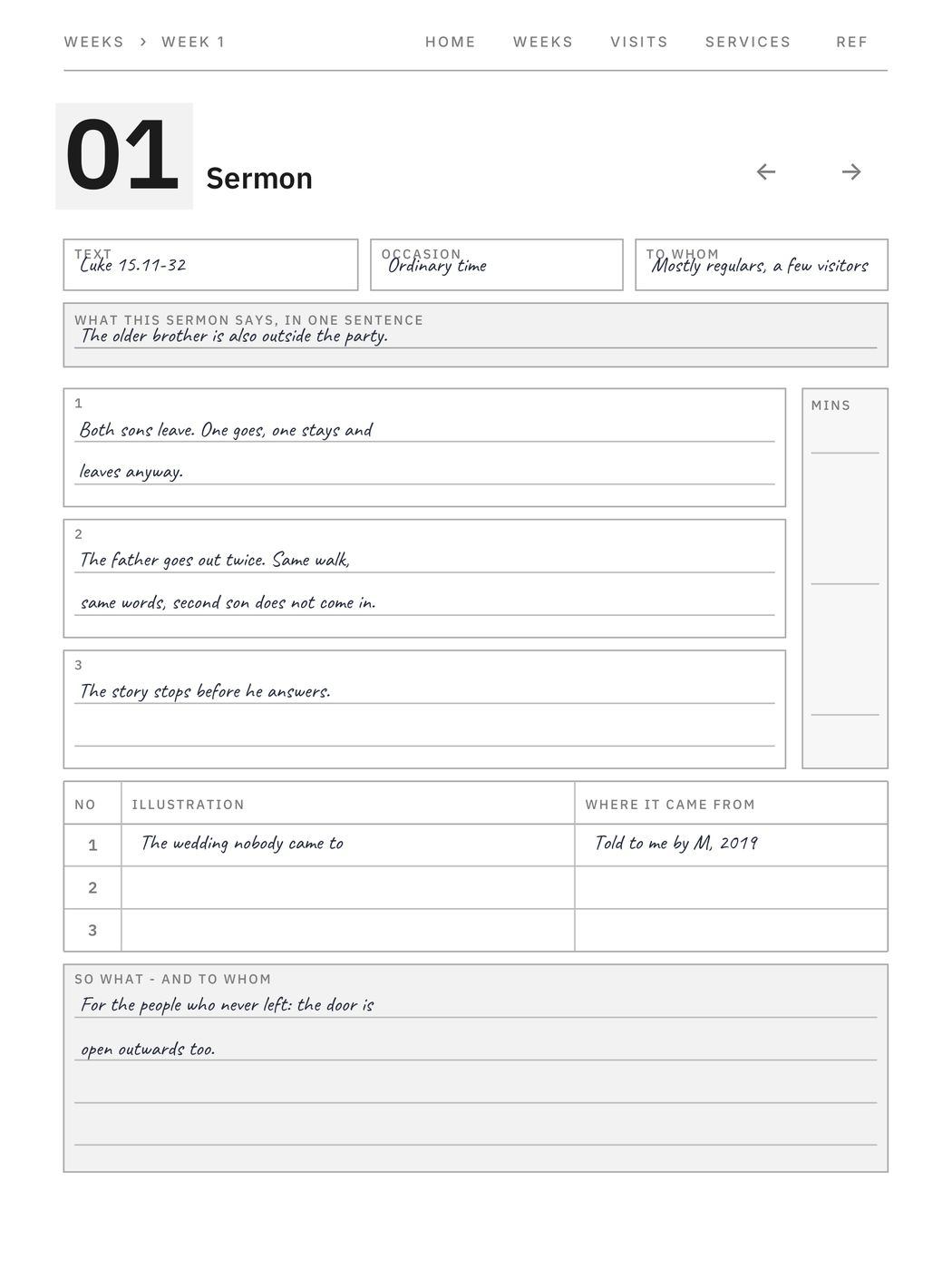
- 150 pages, undated - forty weeks, each with an exegesis sheet and a sermon worksheet, and every calendar row taps through to its own pair
- The sermon's one sentence is drawn as one line, not a box: if it takes three sentences it is three sermons, and two of them are for another week
- Three structure boxes and no fourth line - the cap is drawn rather than advised
- Observation, interpretation and application are separate boxes in that order, because you cannot interpret what you have not observed or apply what you have not interpreted
- A correlation box for the traditions that take that step, and no insistence for the ones that do not
- Every illustration has a source column beside it - an unattributed story becomes yours by accident
- A timing column down the outer edge of the worksheet, written on the Sunday and read the Saturday after
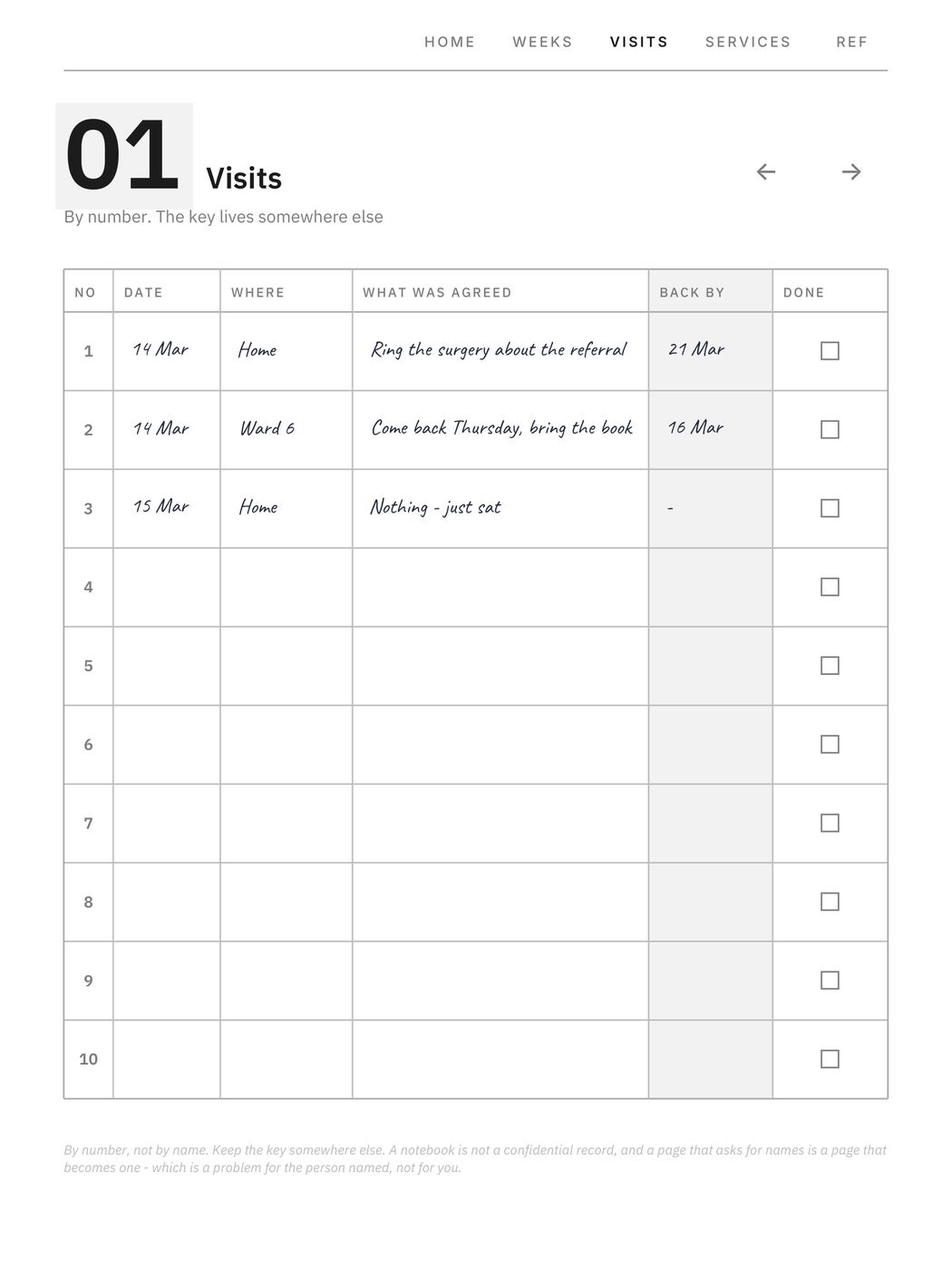
- Pastoral visits kept by number with the key held elsewhere, recording what was agreed and when you said you would be back - not what was said
What is inside
For the working minister — not the devotional reader.
Undated, so it starts on whatever Sunday you start it on. Forty weeks, each with an exegesis sheet and a sermon worksheet, and every row of the calendar taps straight through to its pair. Plus series planning, sixteen pages of pastoral visit log, funeral, wedding and baptism preparation, meeting pages and a reading log. 150 pages, all linked.
WHAT MAKES IT DIFFERENT
· The sermon's one sentence is drawn as one line, not a box. If it takes three sentences it is three sermons, and two of them are for another week
· Three structure boxes and no fourth line. The cap is drawn rather than advised, which is the only kind of advice a printed page can actually give
· Observation, interpretation and application are three separate boxes in that order, because you cannot interpret what you have not observed or apply what you have not interpreted. Every other sheet on sale runs them together under one heading
· A correlation box for the traditions that take that step, and no insistence for the ones that do not
· Every illustration has a source column beside it. An unattributed story becomes yours by accident, and the one person in the room who knows where it came from is the one who will remember
· A timing column down the outer edge, filled in on the Sunday and read the Saturday after. Planned against actual is the only thing that ever shortens a sermon
· Pastoral visits are kept by number, with the key held somewhere else. The row records what was agreed and when you said you would be back — not what was said. A notebook is not a confidential record, and a page that asks for names becomes one
· Funeral, wedding and baptism sheets are for the conversation and the preparation, not the order of service
· No scripture text is printed, in any translation. Every modern translation is licensed and most limit what may be reproduced — so there are lines to write it on and nothing printed on them
· No liturgy and no lectionary. Both belong to a tradition, and the columns are here for yours
· No branding inside. You are buying paper, not an advert.