
Templates / A household ledger with no rules printed
Budget Log
Households keeping their own budget on paper.
One sum is printed in the whole file, and it is a division.
$9.99
Instant download · No account · All nine device editions
| Pages | 113 |
|---|---|
| Editions | mono, colour |
| Variants | right hand, left hand |
| Devices | reMarkable 2, reMarkable Paper Pro, reMarkable Paper Pro Move, Kindle Scribe, Kindle Scribe Colorsoft, Supernote Manta, Boox Note Air, A4 Print, US Letter Print |
| Format | Hyperlinked PDF, one file per device |
| Updates | Included, for as long as the template exists |
- 113 pages, undated - twelve months, each with a month sheet, a bills calendar, three spending logs and a review
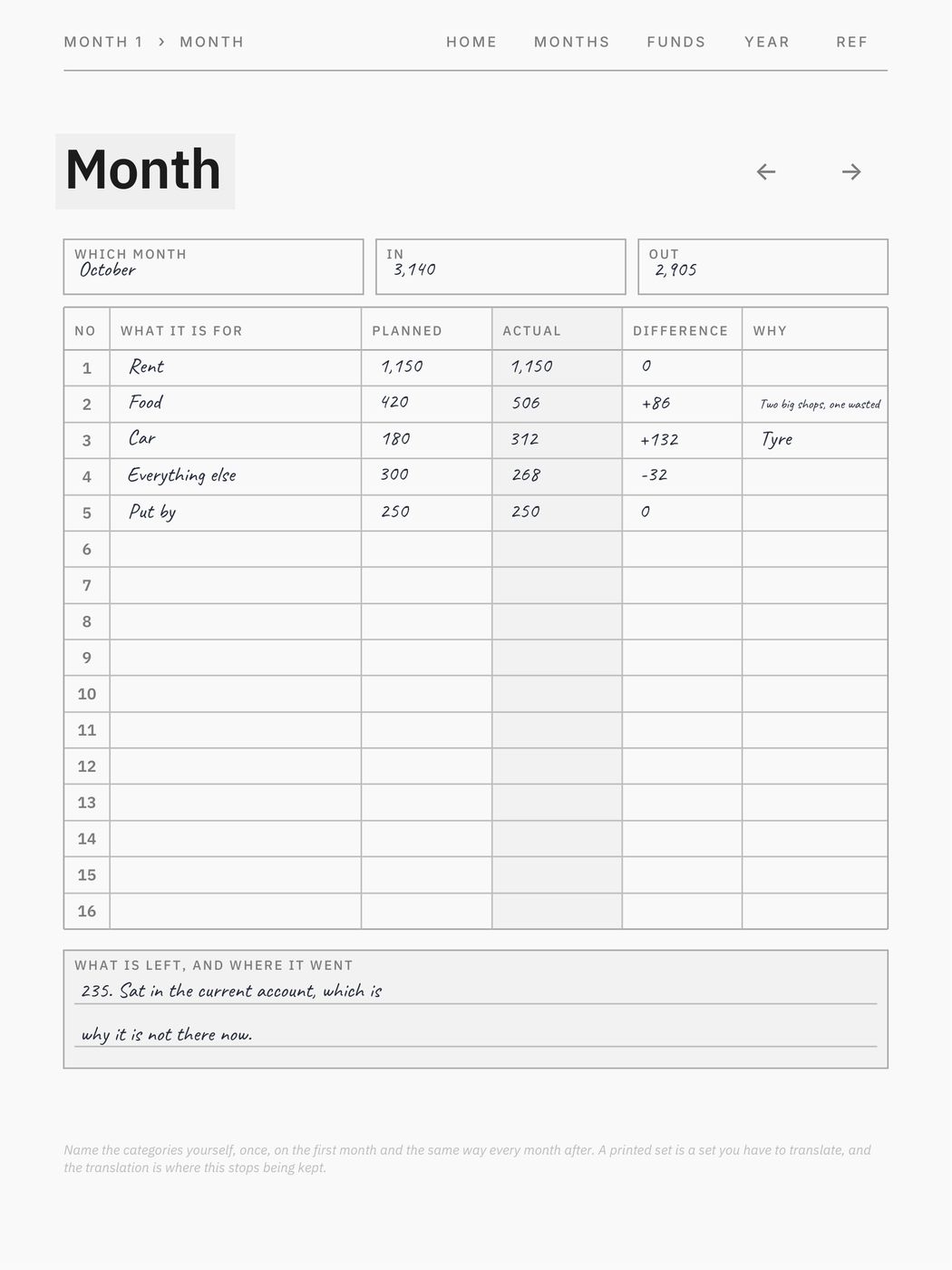
- Every category name is blank. A household's categories are its own, and a printed set is one you have to translate every month - which is where the habit stops
- Planned, actual, difference and why. The why column is the one that changes anything
- A bills calendar where each bill goes on the day it leaves, because the shape of a month is not how much goes out but when
- The day numbers are not printed either - the book is undated, and a printed 1 to 31 is wrong for eleven months in twelve
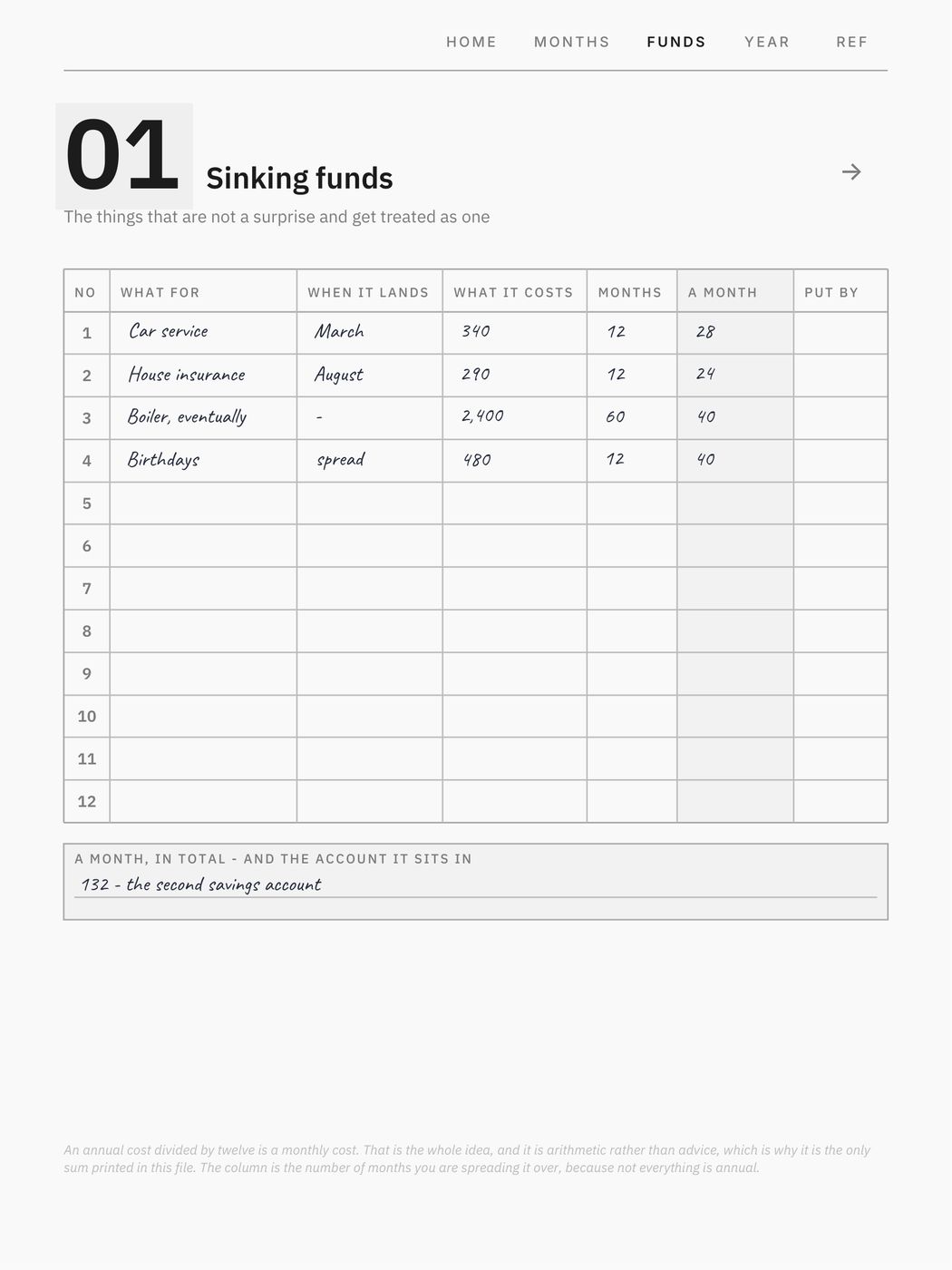
- One sum is printed in the whole file: what it costs, divided by how many months, is what to put by. That is arithmetic, not advice
- A months column on the sinking funds, because not everything is annual - a five-yearly cost over sixty months is the same sum with a different divisor
- No percentages, no reserve rule, no interest rate and no date appears anywhere, and a reference page says why in those words
What is inside
Undated, and every category left blank — because they are yours.
Twelve months, each with a month sheet, a bills calendar, three spending logs and a review. Plus sinking funds, a year view, subscriptions, debts and notes. 113 pages, all linked.
WHAT MAKES IT DIFFERENT
· Every category name is blank. A household's categories are its own, and a printed set is a set you have to translate every month — which is exactly where this stops being kept
· Planned, actual, difference and why. The why column is the one that changes anything: a month where the number was wrong and nobody wrote down why is a month you repeat
· A bills calendar where each bill goes on the day it leaves. The shape of a month is not how much goes out but when — a month where everything leaves on the first is a different month from one where it is spread, at exactly the same total
· The day numbers are not printed either. The book is undated, and a printed 1 to 31 would be wrong for eleven months in twelve
· One sum is printed in the entire file: what it costs, divided by how many months, is what to put by. That is arithmetic, not advice, which is the test everything here had to pass
· A months column on the sinking funds, because not everything is annual. A five-yearly cost spread over sixty months is the same sum with a different divisor
· No percentages. Fifty-thirty-twenty, ten per cent, a third — each is right for somebody and none of them is arithmetic
· No reserve rule. Three months of expenses is advice; what you need depends on how steady your income is, which is what twelve months of actuals will show you
· No interest rates and no dates. Rates belong to your accounts and move; filing dates differ by country and move for weekends
· A subscriptions register with a renews-on column — the date you can still do something about
· No branding inside. You are buying paper, not an advert.